
Storage Facility
for Non-Hazardous Waste.
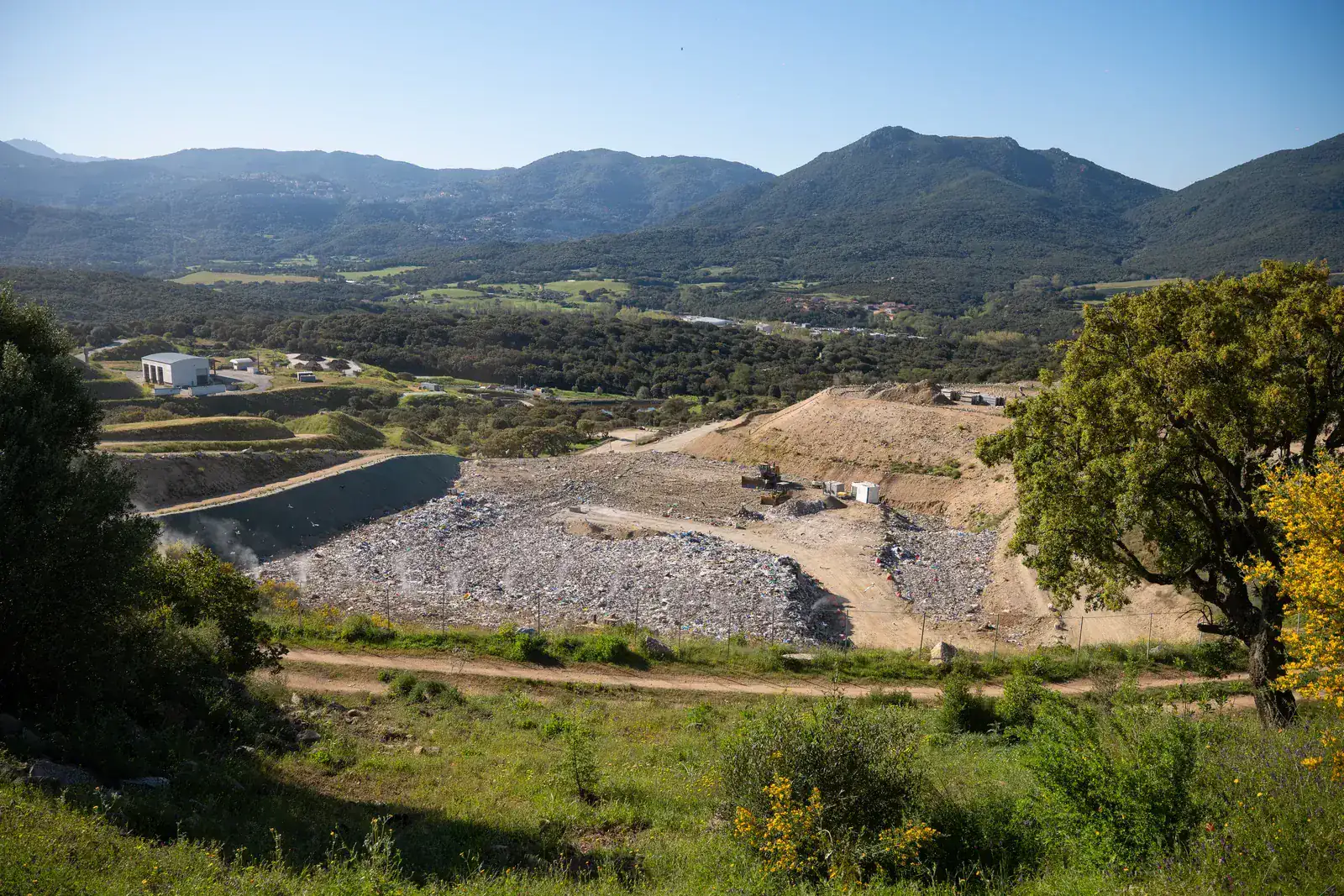
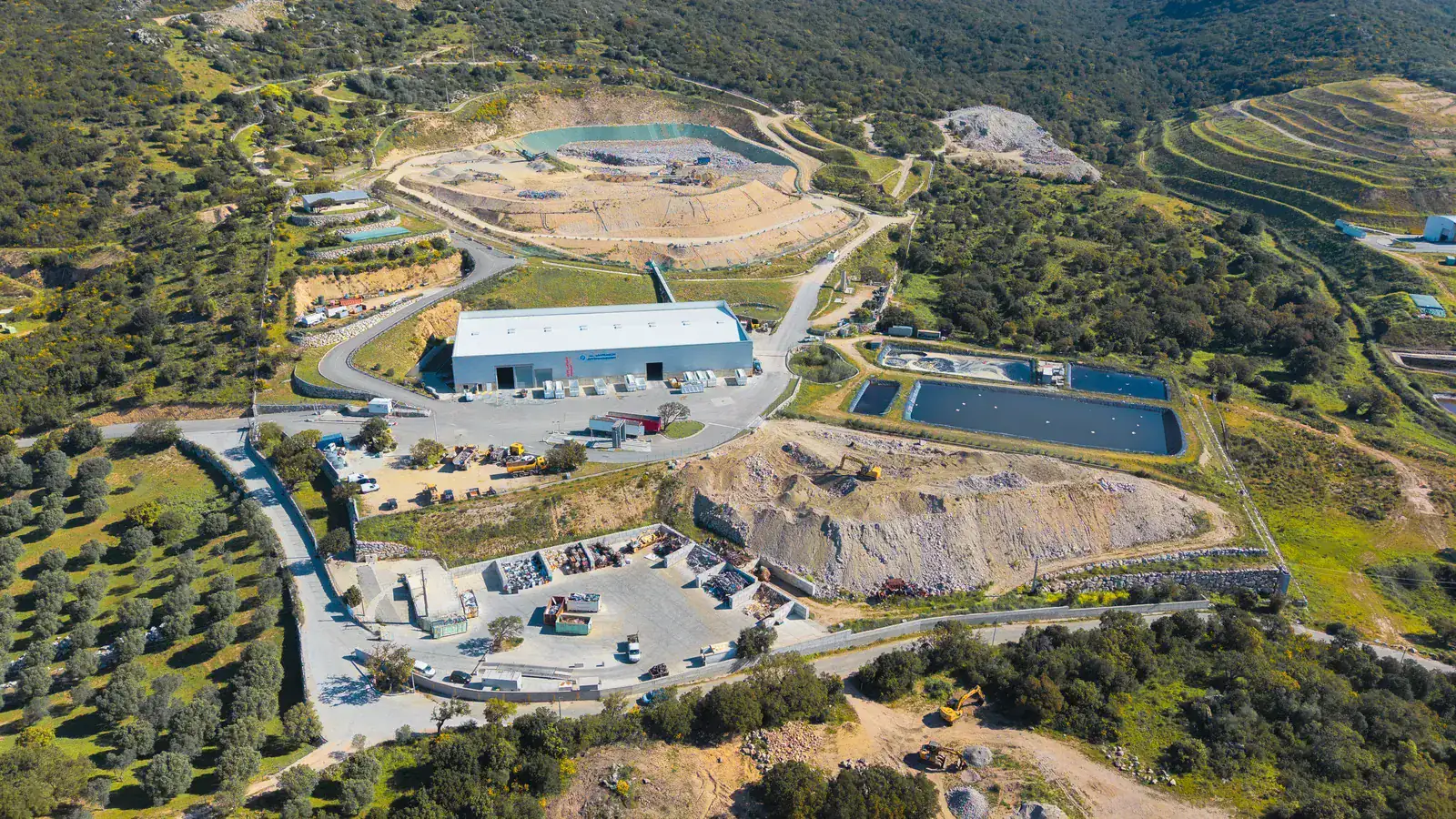
Class 2 ISDND in Viggianello (South Corsica): a site designed for safety, environmental control and the recovery of non-hazardous waste. Discover the journey of a piece of waste, from its arrival at the weighbridge to its final storage.
Organization, prevention,
procedures,commitments.
The safety of our teams and of everyone working on the site is our absolute priority. We guarantee every employee, haulier and contractor working conditions that meet the highest standards: rigorous procedures, ongoing training, personal protective equipment and active risk prevention. Our commitment extends to everyone who works in our facilities.
Our standards, our
actions,our role.
We highlight our environmental commitment through compliance with our standards and regulatory obligations, our concrete actions for the environment, and our role in responsible and sustainable waste management. The objective is to reassure, inform, and demonstrate our seriousness and involvement.
From truck to cell, the
stages of acontrolled treatment.
Every delivery to the ISDND follows a standardised process, checked at each key stage: weighing on arrival, administrative checks, radioactivity detection, then sorting on the line or direct storage in a landfill cell built to an eight-stage technical design.
- Étape 01
Waste transport
Waste arrives on site via approved transporters, according to a schedule coordinated with suppliers.
- Étape 02
Administrative check at entry
Document verification, entry/exit weighing on the weighbridge, visual inspection, radioactivity detection.
- Étape 03
Two possible routes
Route 1: unloading onto the sorting line for recovery and storage of sorting residues. Route 2: direct unloading into the landfill cell.
- Étape 04
Storage
Placement within the cells, according to the validated operating plan.
- Étape 05
Compaction
Waste is compacted to maximize density and optimize site capacity.
- Étape 06
Covering and Management
Daily covering, biogas flaring, leachate management, litter collection, odor treatment.
Theunitsof the ISDND operations, in Corse-du-Sud.
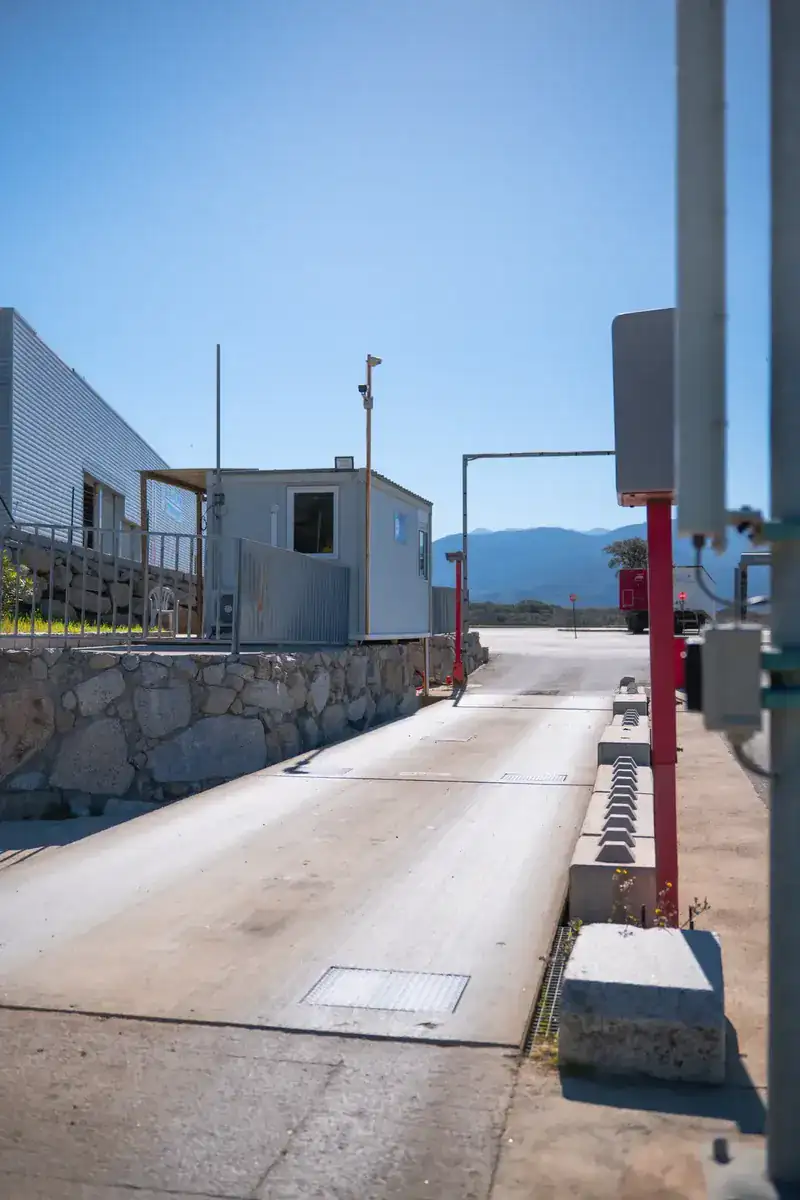
The weighbridge
Located at the site entrance, it is used to register trucks coming in for storage or for the sorting centre. The weighbridge operator registers, weighs and checks the trucks on entry and exit to determine the tonnage delivered and the type of waste. This allows the operator to compile daily, monthly and annual tonnage figures for tracking and invoicing purposes.
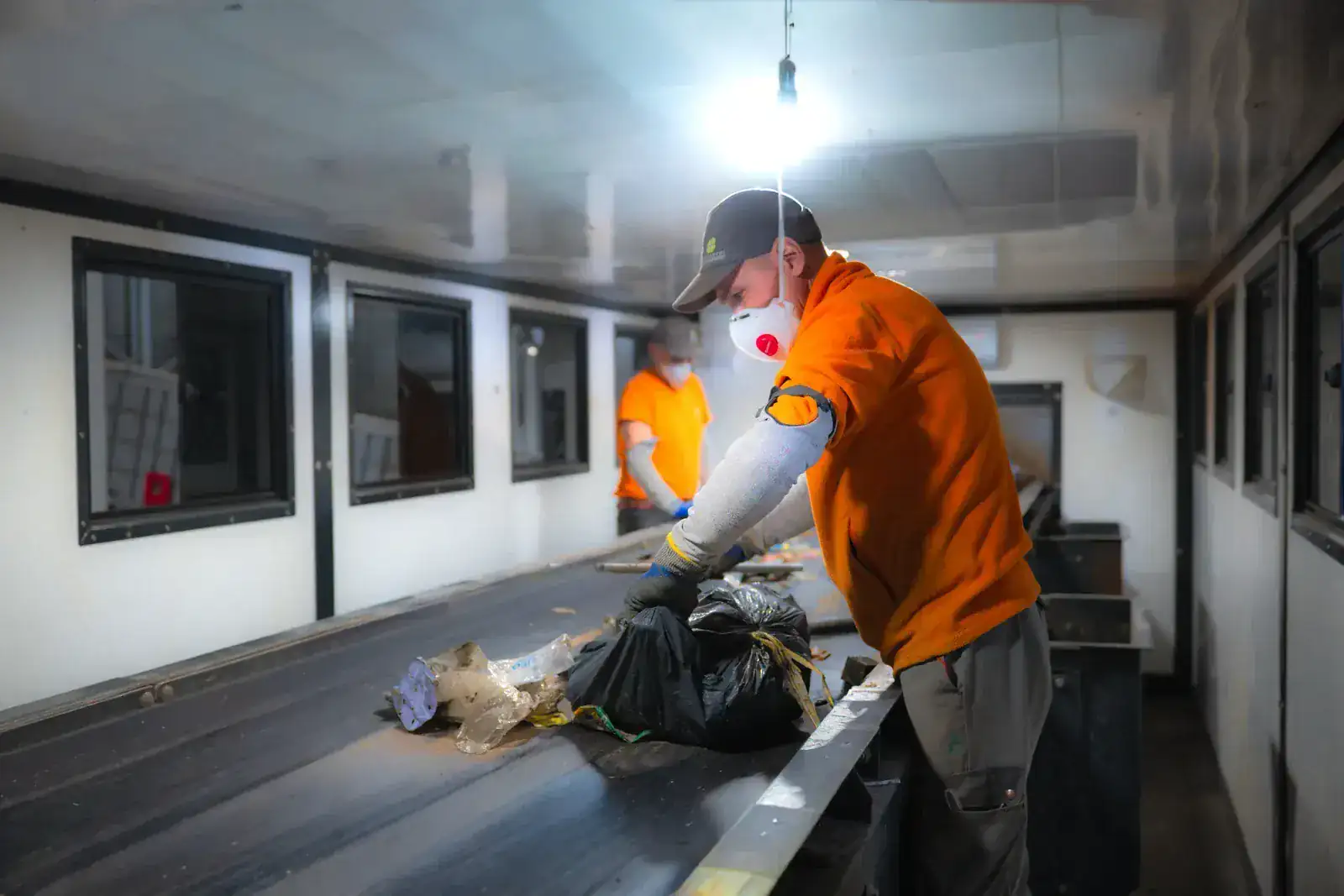
The sorting line
Trucks unload their household waste into a reception pit. The waste is picked up using a grab excavator and fed into the sorting line. First, as it travels along the conveyor belt, the waste passes through a screen that separates out the fine particles. The waste then passes through the sorting cabin, where the operators recover cardboard, plastic and glass. It then passes through an electromagnet before reaching the conveyor belt that sends non-recoverable waste to the waste landfill cell. The sorted waste is stored before being baled for shipment to the mainland.
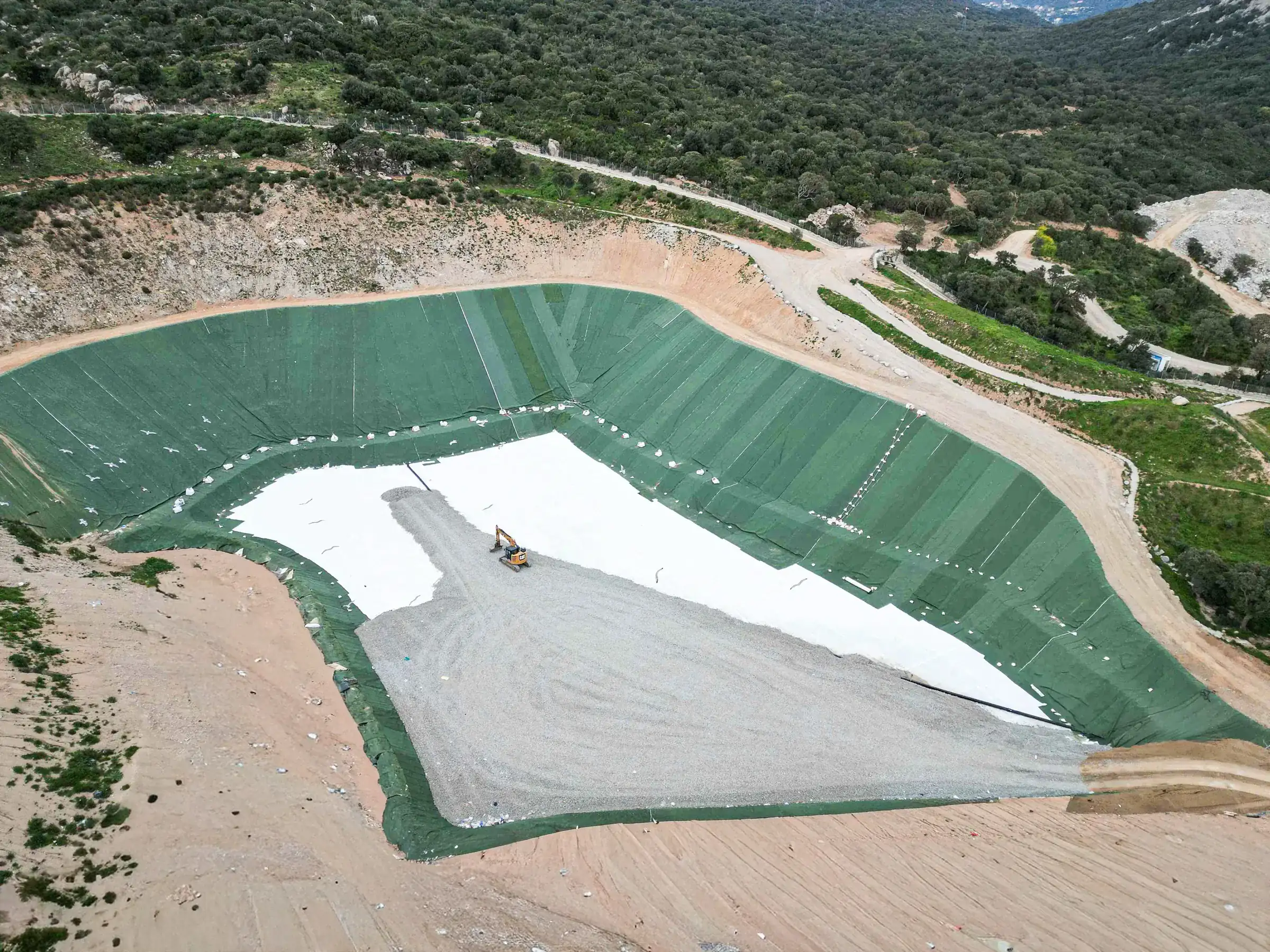
The waste storage area
The landfill cells are built using an eight-stage technical layering system that ensures rigorous protection of the soil and groundwater.
The 8 design stages
- 01 Excavation into rock
- 02 50 cm of gravel
- 03 Anti-contaminant geotextile 120 g/m²
- 04 1 m of compacted soil at 10⁻⁹ m/s
- 05 Bentonitic geotextile 5 kg/m²
- 06 HDPE geomembrane 2 mm
- 07 Anti-puncture / draining geotextile 1.2 kg/m²
- 08 Draining ballast 50 cm
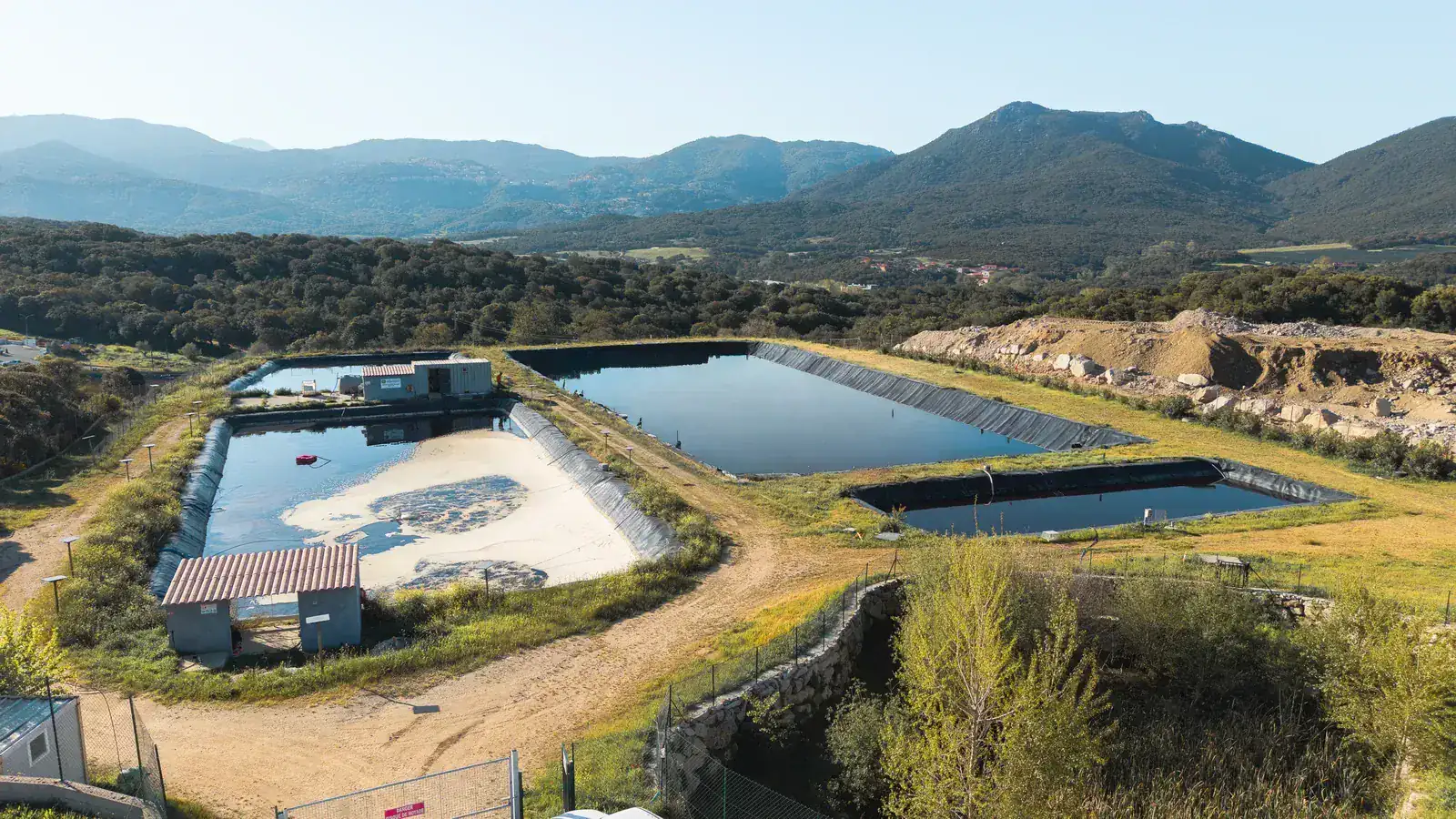
The basin area
The pond area comprises five ponds and one discharge point, dedicated to the management of leachate and rainwater.
- Leachate storage pond
- Control pond for water beneath the landfill cell
- Rainwater pond
- Leachate evaporation basin
- Natural ponds
- Reverse osmosis filtration unit
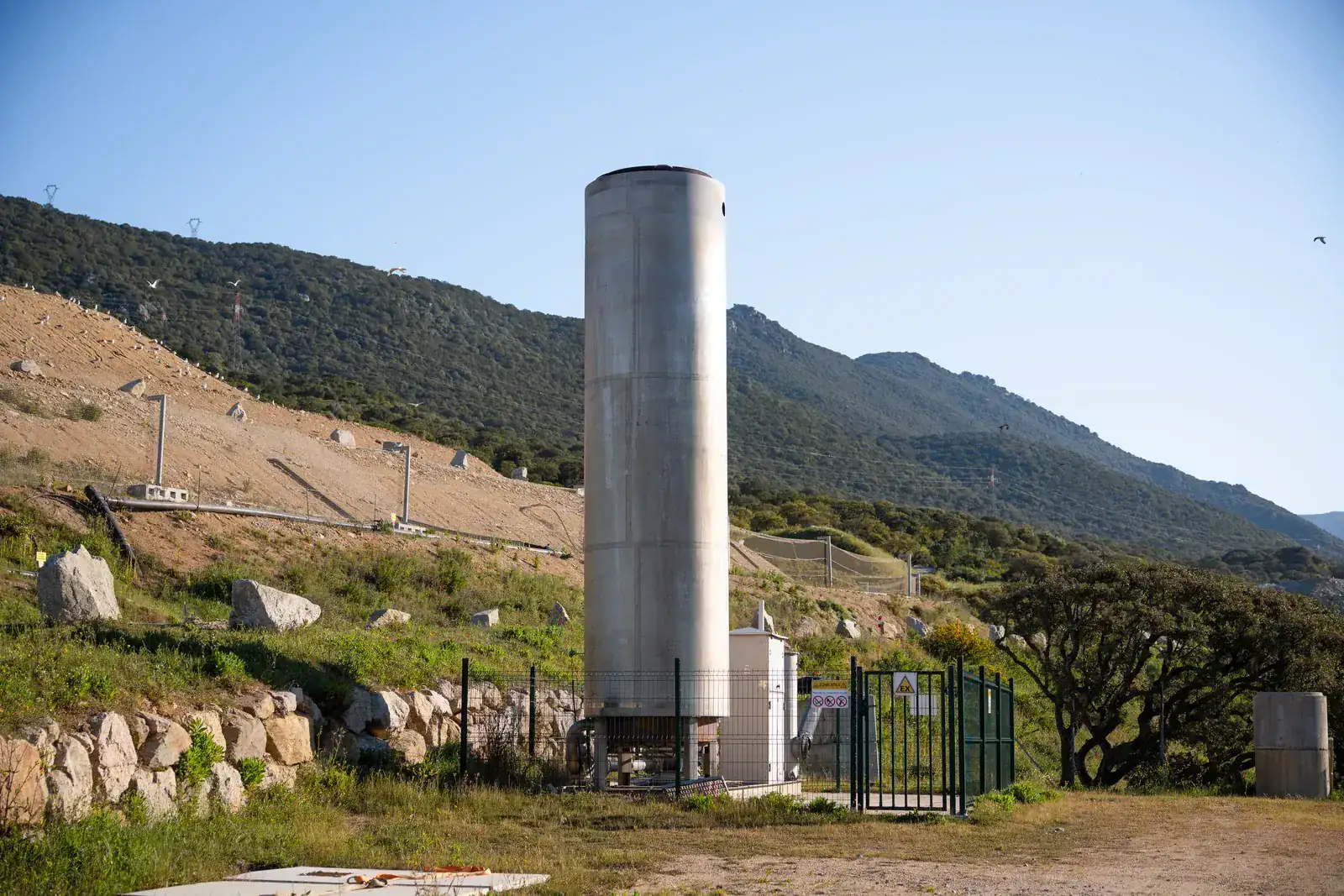
The gas management area
The gas comes from the biological breakdown of the organic waste stored in the landfill cells. Through the action of bacteria, this decomposition produces biogas, mainly composed of methane (CH₄) and carbon dioxide (CO₂). To control this gas, the facility is equipped with a suction-based capture system, made up of a network of wells and pipes operating under negative pressure. The captured gas is then directed to a flare, where it is burned in a controlled manner, reducing its environmental impact. In addition, an advanced study is currently under way to set up a biogas energy recovery system, using cogeneration engines to convert the gas into electricity.
We believe in
transparency. Come and
verifyit for yourself.
Beyond an exchange by email or phone, we invite you to come and concretely discover our facilities, our methods, and our commitments.
Make an appointment